
Happy Diwali Drawing for School Project – Easy Pencil Colour Ideas for Kids
Diwali is one of the most beautiful and joyful festivals celebrated in India. Children especially enjoy Diwali because of the colorful decorations, glowing diyas, beautiful rangoli, sweets, gifts, lanterns, and festive lights. Diwali is also a wonderful time for children to show their creativity through drawing and art projects. A Happy Diwali drawing for a school project can be simple, colorful, and easy enough for young students to make themselves.
Easy Happy Diwali Drawing for School Project
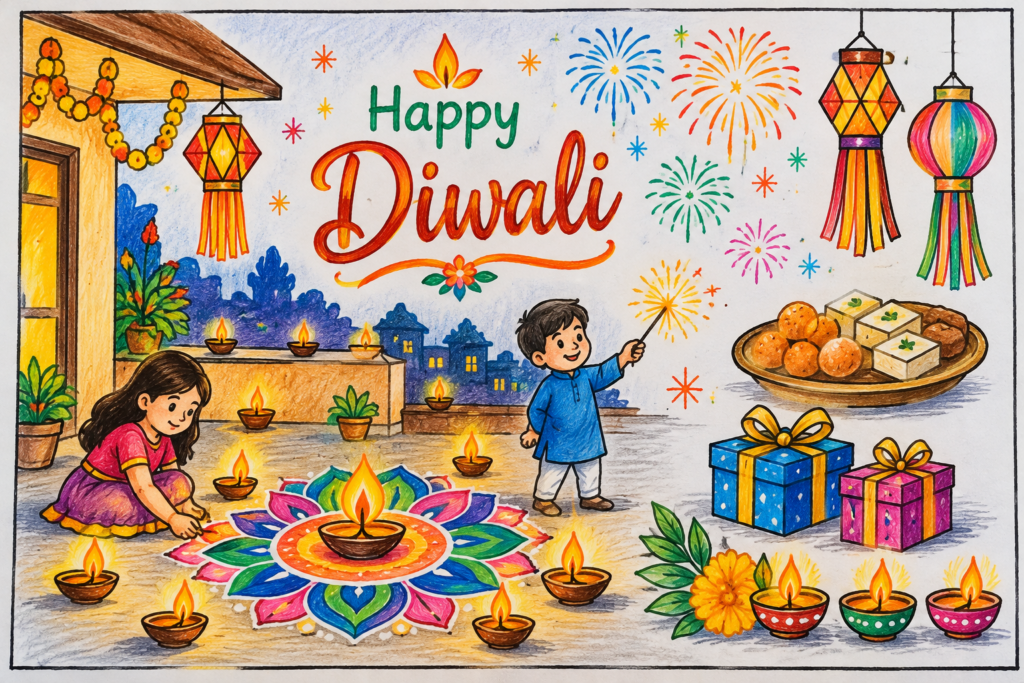
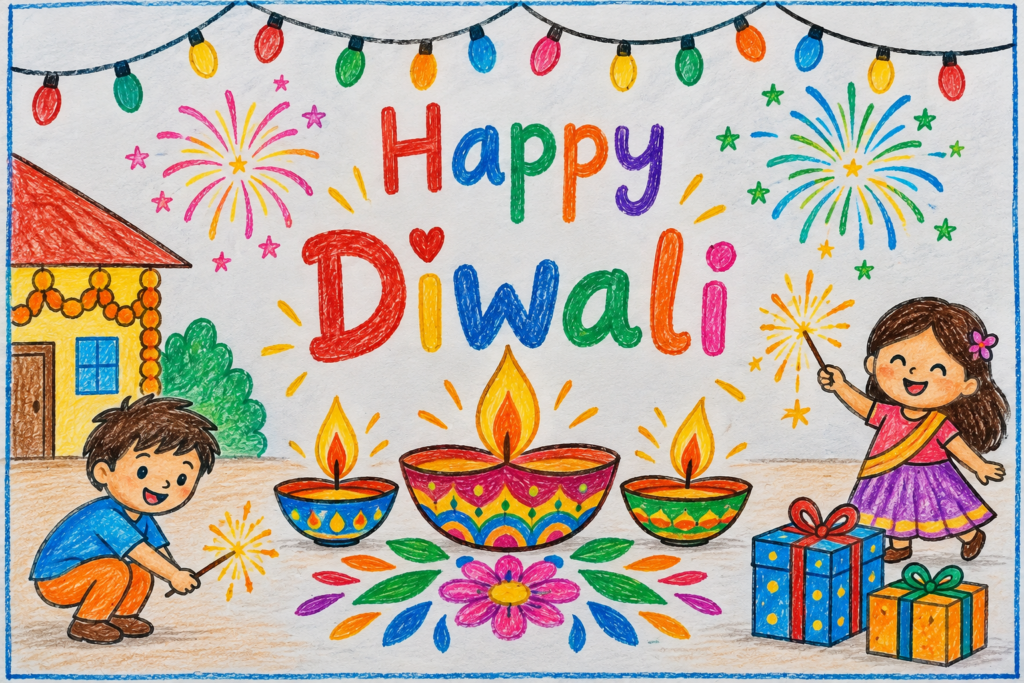
If your child has been asked to prepare a Diwali drawing for school, there is no need to make the project complicated. A simple drawing made with pencil colors can look very attractive. Children can draw a large diya in the center of the page and decorate it with colorful patterns. Around the diya, they can add flowers, stars, small lamps, rangoli designs, and decorative lights.
The words “Happy Diwali” can be written at the top of the drawing using large and colorful letters. Children can use different colors for each letter to make the heading bright and cheerful.
Diwali Drawing Ideas for Kids
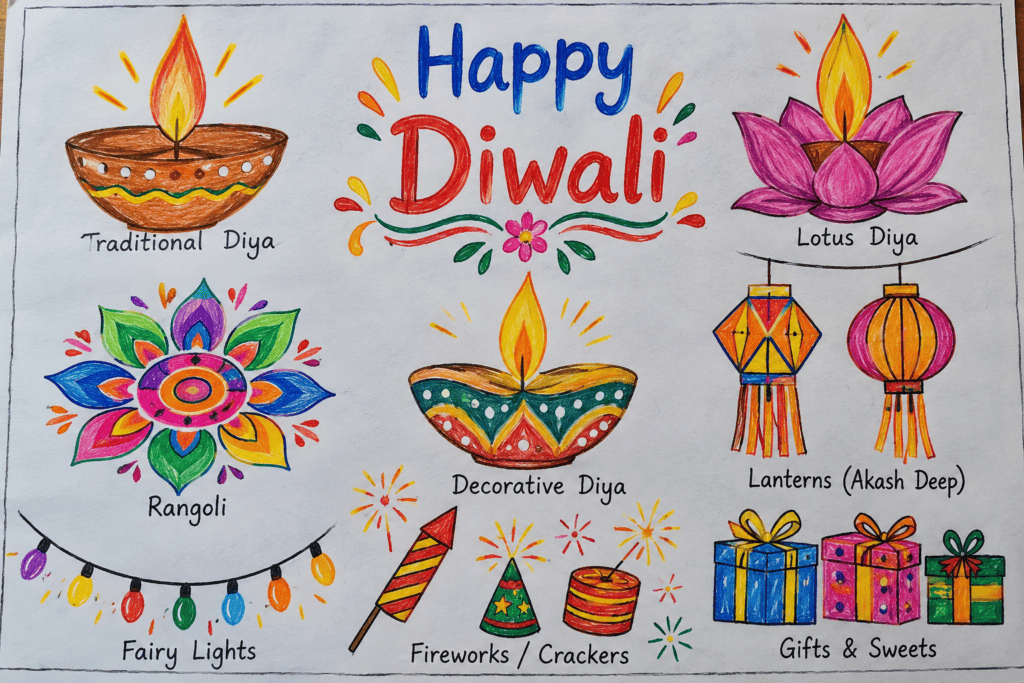
There are many simple ideas that children can use for their Diwali school project. The best design depends on the child’s age and drawing ability. Younger children should choose simple shapes and large objects that are easy to draw and color.
- A beautiful traditional diya
- A colorful rangoli design
- Decorative Diwali lanterns
- Hanging fairy lights
- Flowers and leaves
- Gift boxes
- Fireworks in the sky
- A decorated house
- Small diyas around a rangoli
- A “Happy Diwali” heading
Diwali Drawing with Pencil Colours
Pencil colors are one of the easiest materials for children to use for a school drawing. They are clean, easy to handle, and allow students to create different shades by changing the pressure of the pencil. Bright colors such as red, orange, yellow, green, blue, pink, and purple can be used to make the drawing attractive.
For a diya, children can use orange and yellow for the flame and red, green, blue, or pink for the decorative patterns on the lamp. The rangoli can be filled with different colors to create a beautiful festive effect. A light blue pencil can be used in the background to give the paper a soft and colorful appearance.
How to Make a Simple Diwali Drawing
Making a Diwali drawing does not require advanced drawing skills. Children can follow a few easy steps to complete their school project.
Step 1: Draw the Border
Start by drawing a simple border around the paper. The border can contain small stars, flowers, dots, leaves, or tiny diyas. A decorative border gives the project a neat and finished appearance.
Step 2: Write Happy Diwali
Write “Happy Diwali” near the top or in the center of the sheet. Use large letters so that the message is clearly visible. Each letter can be colored differently using pencil colors.
Step 3: Draw the Diyas
Draw one large diya in the center or several small diyas near the bottom of the page. Add a flame above each diya. The flame can be colored yellow and orange to make it look bright.
Step 4: Add Rangoli
A colorful rangoli can be drawn below the main diya. Children can create a simple flower-shaped rangoli using circles, petals, leaves, and curved patterns. There is no need to make a complicated design.
Step 5: Add Decorative Elements
Finally, add lanterns, stars, fireworks, flowers, gift boxes, and decorative lights around the drawing. These small details can make the school project look much more festive.
Easy Diwali Drawing for Class 1 Students
For Class 1 students, the drawing should be simple and fun. Young children should not be expected to create very complicated artwork. A large diya, a few small lamps, colorful stars, and a simple rangoli are enough to create an attractive project.
Parents can help children understand the basic shapes, but it is better to allow the child to do the coloring and decoration themselves. Small differences in lines and colors make the project look like a genuine children’s drawing and allow them to express their creativity.
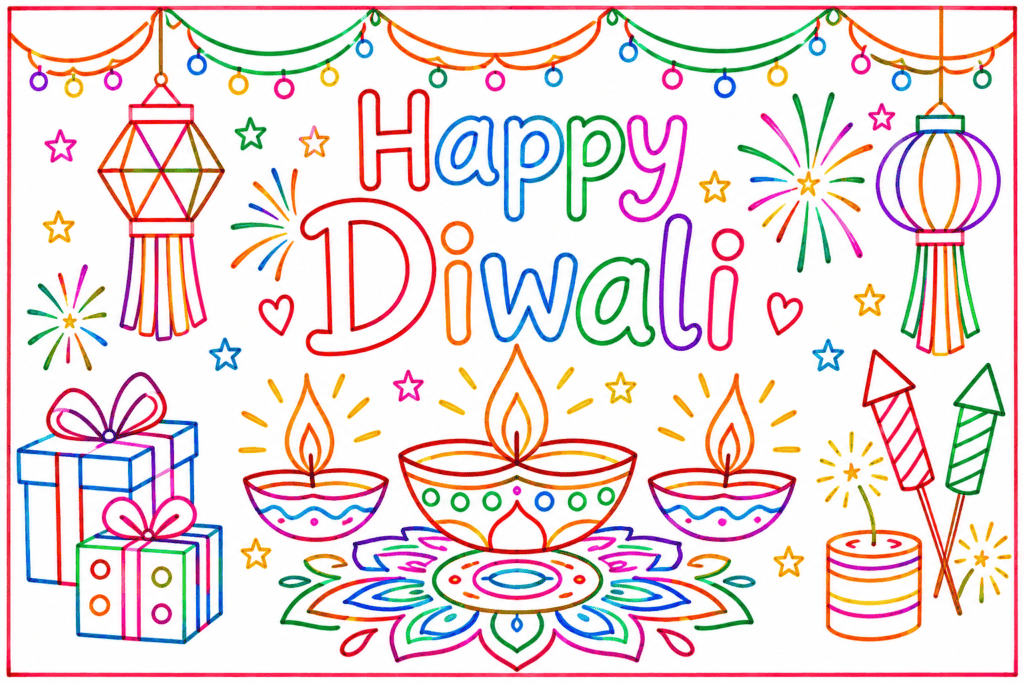
Diwali Drawing with Colored Outlines
Another interesting idea for a school project is to use only colored outlines instead of completely filling every object with color. For example, the outline of a diya can be red, the flame can have an orange outline, and the rangoli can have blue, green, pink, and purple outlines.
This style is especially useful for younger children because they can practice drawing and coloring without worrying about filling every small section perfectly. It also creates a clean and creative project.
Materials Required for a Diwali Drawing
A simple Diwali school project does not require expensive materials. Most children can complete it with items already available at home or school.
- Drawing sheet or white paper
- Pencil
- Eraser
- Black sketch pen
- Colored pencils
- Ruler for the border
- Sharpener
- Optional glitter or decorative materials
Tips for Making a Beautiful Diwali School Project
The most important thing is to keep the drawing neat and enjoyable. Start with a light pencil sketch before using darker outlines. This makes it easier to correct mistakes. Use bright colors but avoid putting too many colors in one small area.
Leave enough white space between different objects so that the drawing does not look crowded. Make the main diya, rangoli, or “Happy Diwali” heading slightly larger than the other elements. This creates a clear focal point.
Children can also experiment with different pencil-color techniques. Light pressure creates a soft shade, while slightly stronger pressure creates a darker color. Two similar colors can also be blended carefully to create attractive effects.
Why Diwali Drawing Is a Good School Activity
Drawing is a wonderful activity for children because it encourages creativity and helps them express their ideas. A Diwali art project also introduces children to Indian traditions and festive decorations. While drawing diyas, rangoli, lanterns, and flowers, children can learn about some of the visual symbols associated with Diwali.
Completing a project on their own can also give young students a sense of achievement. The final drawing does not need to be perfect. What matters most is that the child enjoys the activity and learns something while creating it.
Conclusion
A Happy Diwali drawing for a school project can be simple, colorful, and creative. A combination of diyas, rangoli, lanterns, fireworks, gifts, flowers, and a cheerful “Happy Diwali” message can create a beautiful festive artwork. Pencil colors are particularly suitable for young students because they are easy to use and allow children to experiment with different shades and patterns.
Whether your child is in Class 1 or another primary class, encourage them to create their own version of the drawing. A handmade project filled with their own ideas and colors will always make the celebration more special. Happy Diwali and happy drawing!
- Looking for More Shubh Somwar Images for wishes in HD – Click Here
- Looking for Shubh Mangalwar Images for wishes in HD – Click Here
- Looking for Shubh Budhwar Images for wishes in HD – Click Here
- Looking for Shubh Guruwar Images for wishes in HD – Click Here
- Looking for Shubh Shukrawar Images for wishes in HD – Click Here
- Looking for Shubh Shaniwar Images for wishes in HD – Click Here
- Happy Guru Purnima Images designed for you- Click here
- Top 10 WhatsApp Status in Hindi – Click Here